飛機拆解技術與流程Aircraft Dismantling Technology and Processes
從退役評估到循環再生From Retirement Assessment to Circular Recovery
退役評估與拆解前準備Retirement Assessment and Pre-Dismantling Preparation
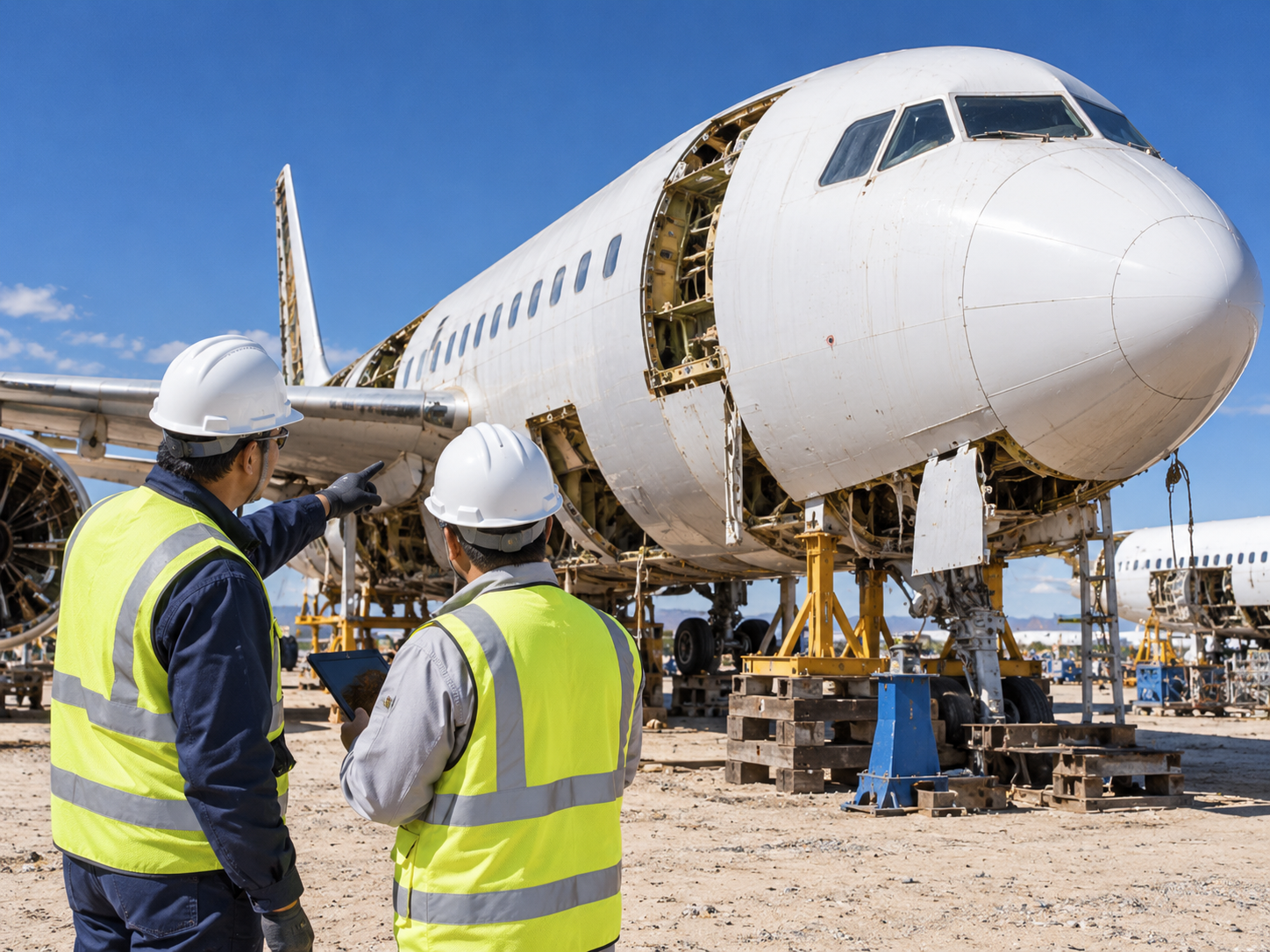
當一架飛機完成長年的飛行任務後,首先要進行完整的退役評估。工程團隊會檢視機齡、飛行時數、維修紀錄與機體狀況,判斷是否適合保存、轉售、零件再利用或正式拆解。拆解前還必須安全排放燃油、液壓油與電池等物質,並依照技術文件規劃拆解順序,確保後續作業安全有序。
When an aircraft reaches the end of its service life, the first step is a comprehensive retirement assessment. Engineers review its age, flight hours, maintenance history, and structural condition to decide whether it should be stored, resold, reused for parts, or dismantled. Before work begins, fuel, hydraulic fluids, batteries, and other materials must be handled safely and the dismantling sequence carefully planned.
精密拆解與高價值零件回收Precision Dismantling and High-Value Parts Recovery
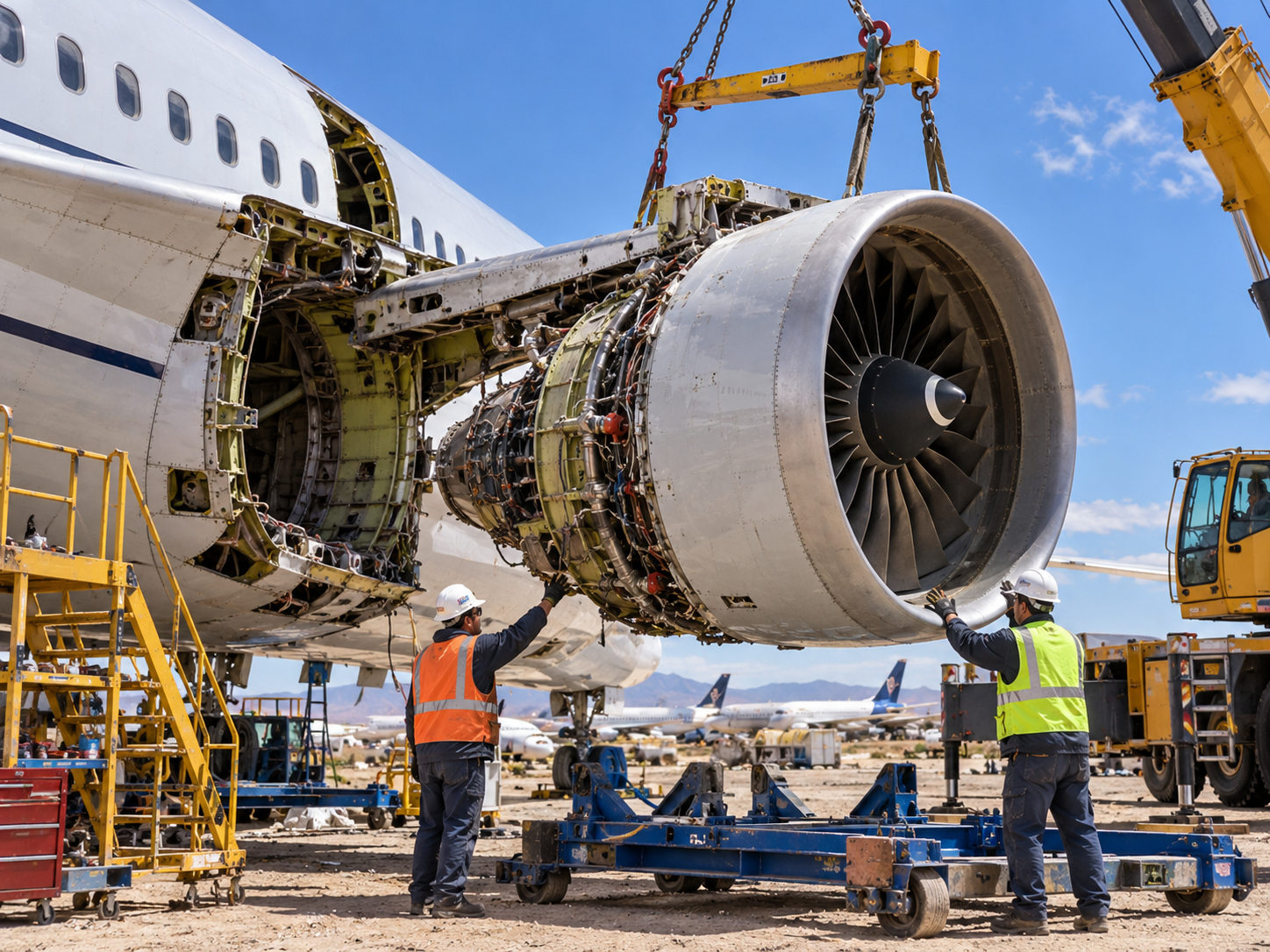
飛機拆解是一項高度專業的精密作業。工程人員通常會優先拆卸發動機、起落架、航電設備、輔助動力系統與客艙設備等高價值零件,並依照標準流程進行檢查、分類與保存。部分零件經過檢測與維修後,仍可重新投入航空維修體系,延續其使用價值。
Aircraft dismantling is a highly specialized technical process. Teams usually remove high-value components first, such as engines, landing gear, avionics, auxiliary power systems, and cabin equipment. These parts are inspected, cataloged, and preserved under controlled procedures. After testing and refurbishment, some components can return to the aviation maintenance supply chain and continue their service life.
機體分解與材料分類Airframe Breakdown and Material Sorting
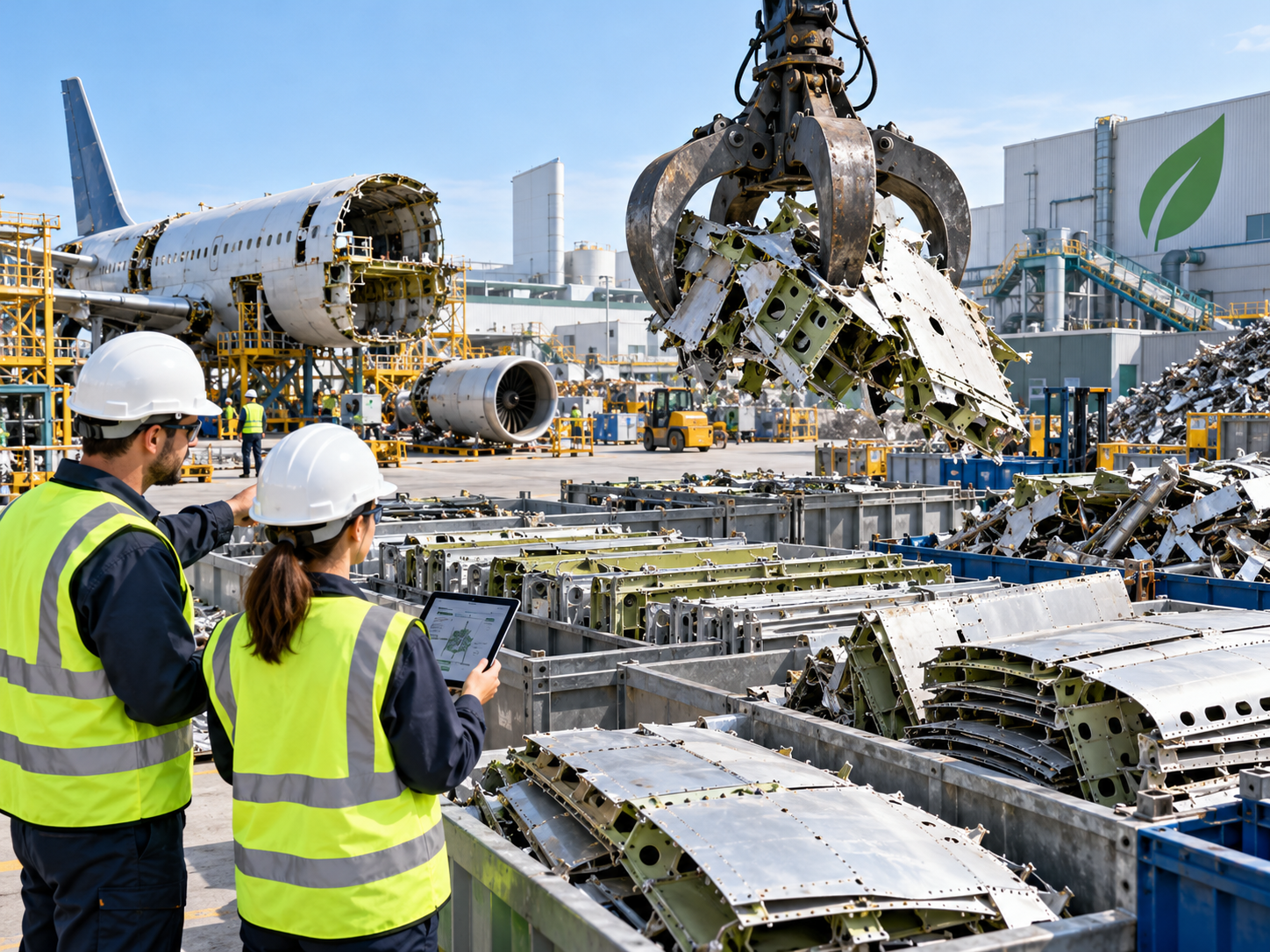
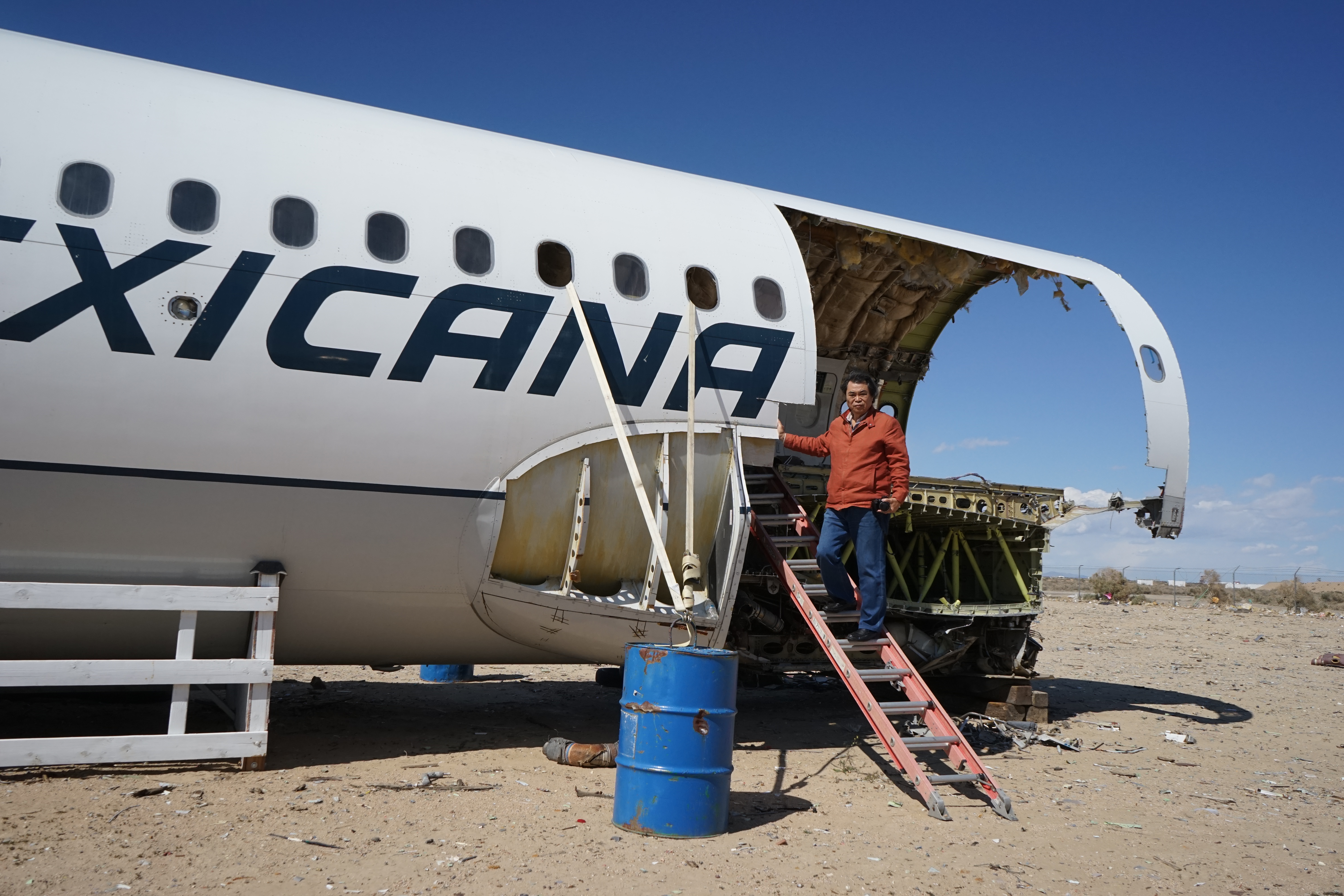
完成重要零組件拆卸後,工程團隊會進一步進行機身、機翼與結構件的分解作業。鋁合金、鋼材、鈦合金與複合材料都需要分別處理與回收。這個階段不僅考驗工程技術,也展現退役飛機如何從完整機體,逐步轉化為可再利用的材料與工業資源。
After reusable components are removed, teams move on to breaking down the fuselage, wings, and structural sections. Aluminum alloys, steel, titanium, and composite materials must be separated and processed in different ways. This stage highlights how a retired aircraft is transformed step by step from a complete airframe into reusable materials and valuable industrial resources.
智慧回收與循環航空未來Smart Recycling and the Future of Circular Aviation
隨著數位化與自動化技術進步,飛機拆解產業正朝向更高效率、更高回收率的方向發展。透過智慧管理、材料追蹤與先進回收流程,退役飛機中的金屬與複合材料可以更有效地再利用。未來的航空產業,也將在設計、營運與退役管理上,更全面落實循環經濟與永續理念。
As digital management and automation continue to evolve, aircraft dismantling is becoming more efficient and more resource-conscious. With smart tracking systems, better material separation, and advanced recovery methods, metals and composites from retired aircraft can be reused more effectively. In the future, aviation will increasingly embrace circular-economy and sustainability principles across design, operation, and retirement management.