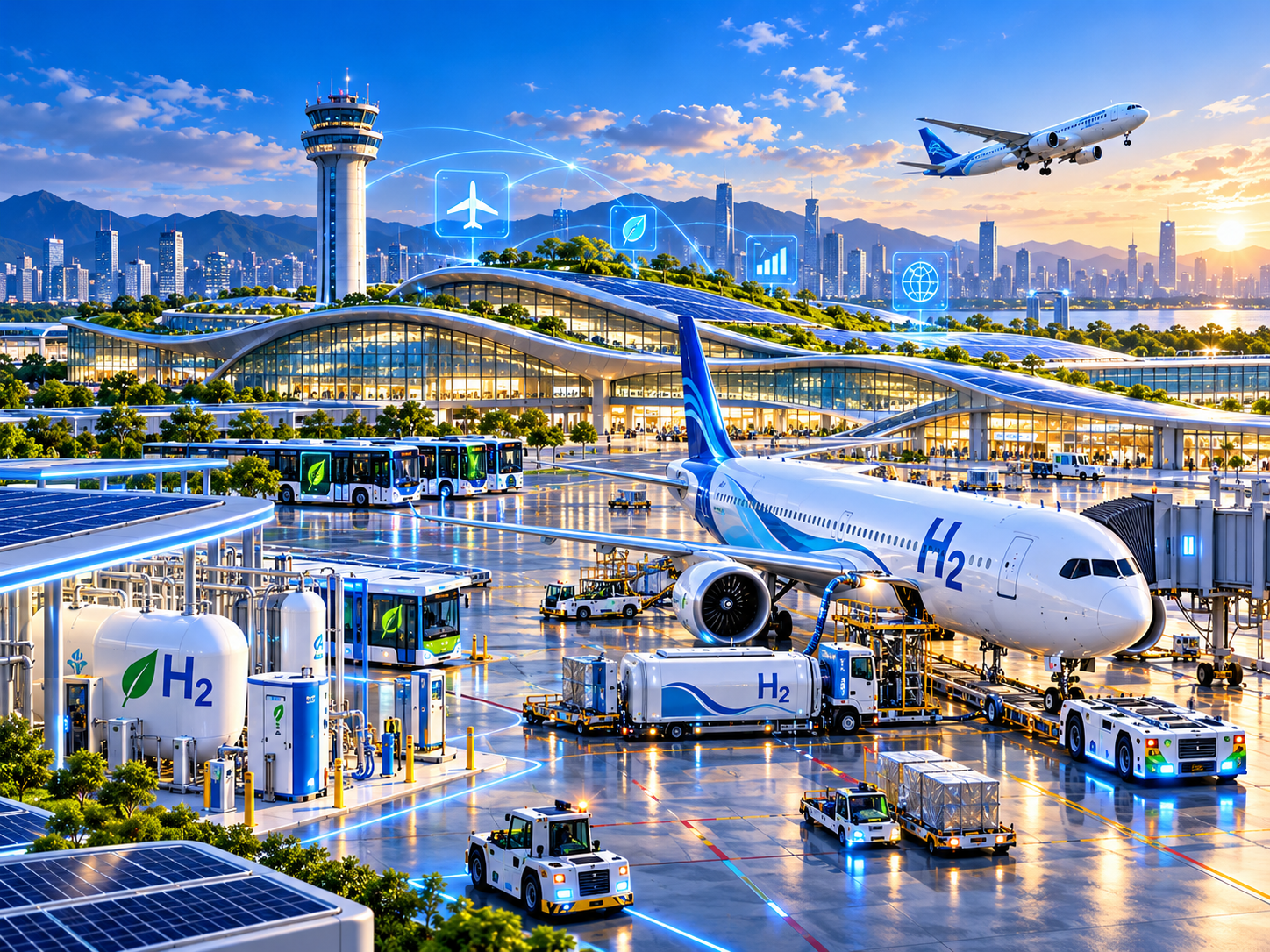
低碳機場與營運Low-Carbon Airports & Operations
打造更智慧、更潔淨、更高效率的機場與航空營運Building Smarter, Cleaner, and More Efficient Airports and Aviation Operations.
綠色機場:航空永續轉型的重要基地Green Airports: Foundations for Sustainable Aviation
隨著全球航空運輸持續發展,機場已不再只是旅客與貨物的轉運場所,更是推動航空產業低碳轉型的重要基地。現代機場擁有航廈、跑道、貨運中心及龐大的地面支援設施,每天需要消耗大量能源。為降低營運過程中的溫室氣體排放,許多國際機場開始導入綠建築設計、高效率空調、智慧照明及能源管理系統,並透過建築隔熱、自然採光與設備升級,減少能源浪費。低碳機場的核心理念,是在維持安全、服務與效率的同時,持續降低能源消耗與碳排放。
As global air transport continues to grow, airports are no longer only transfer hubs for passengers and cargo. They have become key foundations for the aviation industry’s low-carbon transition. Modern airports include terminals, runways, cargo centers, and extensive support facilities that consume large amounts of energy every day. To reduce greenhouse-gas emissions, many international airports are adopting green-building design, efficient HVAC systems, smart lighting, and energy-management technologies. Through insulation, daylighting, and equipment upgrades, airports can reduce waste while maintaining safety, service quality, and operational efficiency.

再生能源與智慧能源管理Renewable Energy & Smart Energy Management
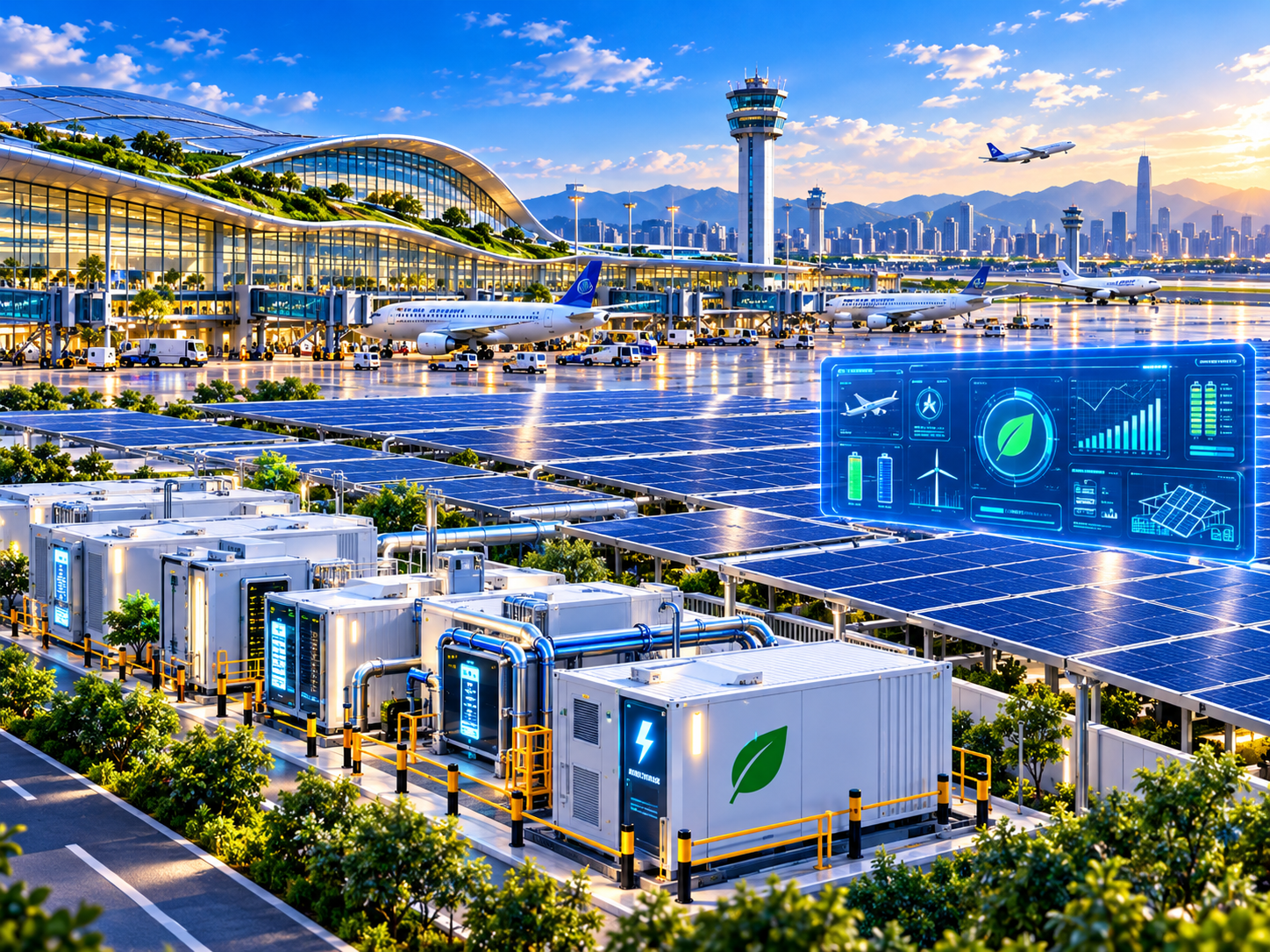
能源轉型是低碳機場建設的重要環節。由於航廈、停機坪及附屬設施具有龐大的用電需求,如何提升能源效率並增加低碳電力供應,已成為現代機場的重要課題。部分機場利用航廈屋頂、停車場與適當土地設置太陽能發電系統,並在符合飛航安全要求的條件下,結合儲能設備與智慧電網技術。智慧能源管理平台可透過感測器與即時數據,監控照明、空調、供電及設備運轉情況,依照航班與旅客流量調整能源配置。
Energy transition is a core element of low-carbon airport development. Because terminals, aprons, and support facilities require large amounts of electricity, improving efficiency and increasing low-carbon power supply have become major priorities. Some airports install solar-power systems on terminal roofs, parking structures, and suitable land, while also integrating storage systems and smart-grid technologies under aviation-safety requirements. Smart energy-management platforms use sensors and real-time data to monitor lighting, cooling, power distribution, and equipment performance, allowing airports to optimize energy allocation according to flight schedules and passenger flows.
綠色地勤設備與低碳地面營運Green Ground Support & Low-Carbon Operations
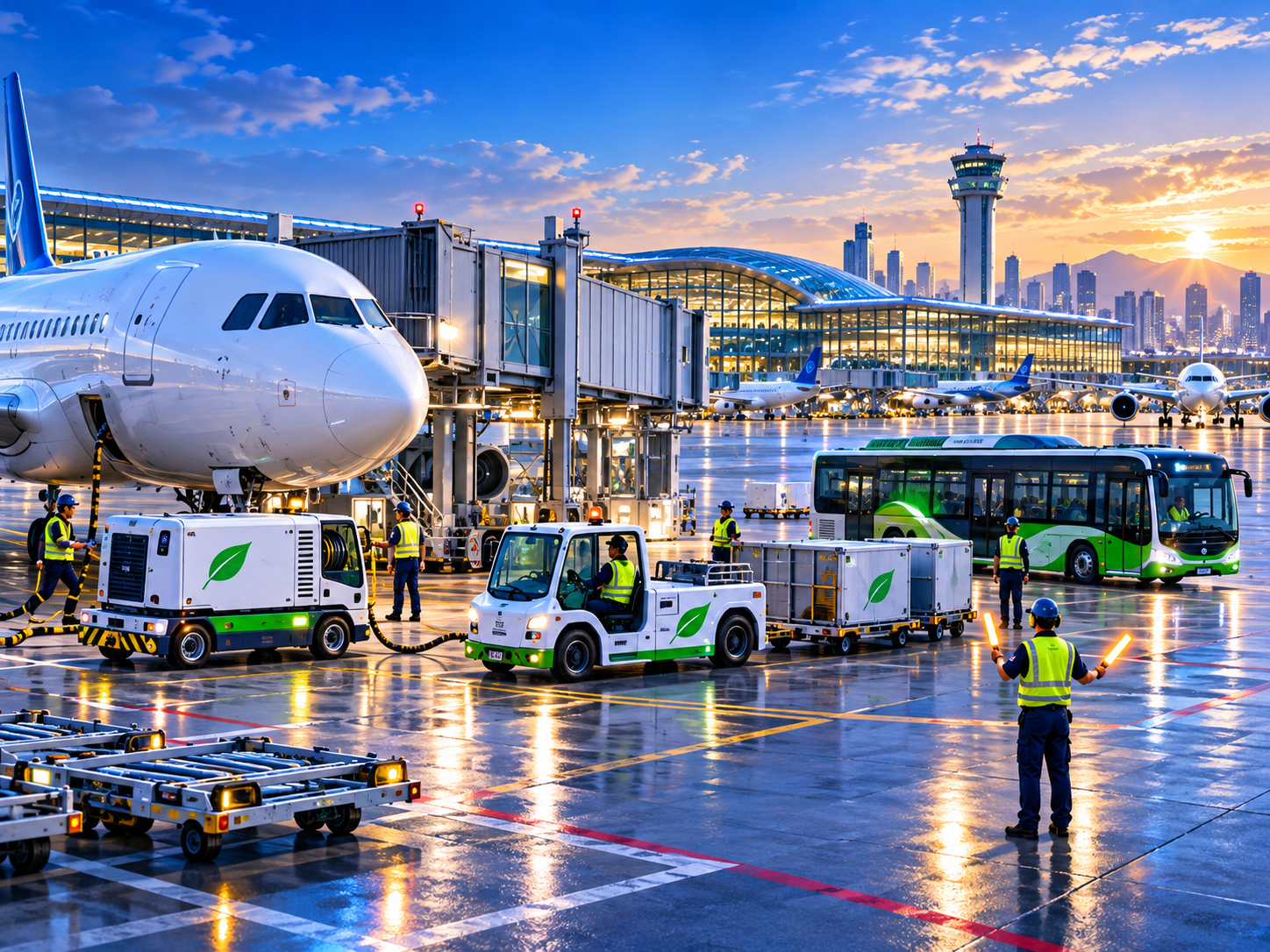
除了航廈與建築設施,機場地面作業也是降低碳排放的重要領域。傳統機場使用大量燃油設備,包括行李拖車、牽引車、地面電源車及旅客接駁巴士。隨著電池與充電技術逐漸成熟,電動地勤設備正逐步取代部分傳統車輛,減少地面作業的直接排放與噪音。機場也可透過固定式地面供電及預冷空調設備,降低飛機停靠期間使用輔助動力系統的需求,而地面調度與滑行優化,也有助於減少等待與燃油浪費。
Beyond terminals and buildings, ground operations are also a critical area for reducing carbon emissions. Traditional airports rely on many fuel-powered vehicles, including baggage tractors, pushback tugs, ground-power units, and passenger shuttle buses. As battery and charging technologies improve, electric ground-support equipment is gradually replacing conventional vehicles, reducing direct emissions and noise. Airports can also use fixed ground power and pre-conditioned air units to reduce aircraft auxiliary-power use while parked, while better dispatch coordination and the optimization help reduce delays and unnecessary fuel burn.
未來智慧機場與淨零航空願景Future Smart Airports & Net-Zero Aviation Vision
面對航空產業邁向淨零排放的長期方向,未來機場將逐步發展為整合能源、數位科技與永續運輸的智慧樞紐。除了持續提升建築與地面設施效率,機場也需預留永續航空燃料、電動航機充電及氫能航空等新世代技術,規劃相關基礎設施。人工智慧、數位分身與自動化系統可協助改善航班調度、設備維護及旅客動線,提高整體營運效率。未來低碳機場將成為連結城市、能源產業與全球航空網絡的綠色基礎建設。淨零機場是持續推進的長期目標,並不代表所有機場目前都已達成淨零排放;本節圖片呈現未來概念願景。
As aviation moves toward long-term net-zero goals, future airports will evolve into smart hubs that integrate energy systems, digital technologies, and sustainable transportation. In addition to improving the efficiency of buildings and ground facilities, airports must prepare infrastructure for sustainable aviation fuel, electric-aircraft charging, and hydrogen-powered aviation. Artificial intelligence, digital twins, and automation can improve flight scheduling, equipment maintenance, and passenger flow management. Future low-carbon airports will serve as green infrastructure connecting cities, energy industries, and the global aviation network. Net-zero airports remain a long-term development goal, not a claim that all airports have already achieved net-zero emissions; the illustration in this section presents a future concept.