
永續航空燃料Sustainable Aviation Fuel (SAF)
推動綠色飛行,守護地球未來Powering greener flight for a more sustainable planet.
永續航空燃料:航空減碳的重要關鍵Sustainable Aviation Fuel: A Key to Lower-Carbon Aviation
隨著全球航空運輸持續成長,如何降低飛行所產生的溫室氣體排放,已成為航空產業的重要課題。永續航空燃料(SAF)是以符合永續性要求的再生資源、廢棄物或其他替代原料製成的航空燃料,能在符合相關技術規範的條件下,應用於現有航空發動機及燃油供應系統。與傳統石化航空燃料相比,SAF 的主要環境效益來自原料取得、生產、運輸到燃燒的全生命週期碳排放減量,而非飛行時完全不排放二氧化碳。由於大型長程客機短期內仍高度依賴液態燃料,SAF 被視為航空產業邁向低碳轉型的重要途徑,也是兼顧現有機隊運作與環境永續的關鍵技術。
As global air travel continues to grow, reducing greenhouse gas emissions from aviation has become a critical challenge. Sustainable aviation fuel (SAF) is produced from renewable resources, waste materials, or other alternative feedstocks that meet sustainability criteria. It can be used in existing aircraft engines and fuel supply systems under current technical standards. Compared with conventional fossil-based jet fuel, SAF’s main environmental benefit comes from lower life-cycle carbon emissions—from feedstock sourcing, production, and transportation to combustion—rather than zero emissions during flight. Since long-haul aircraft still rely heavily on liquid fuels in the near term, SAF is a key pathway for the aviation industry to transition to a lower-carbon future while maintaining current fleet operations.

多元原料與先進燃料製造技術Diverse Feedstocks and Advanced Production Technologies
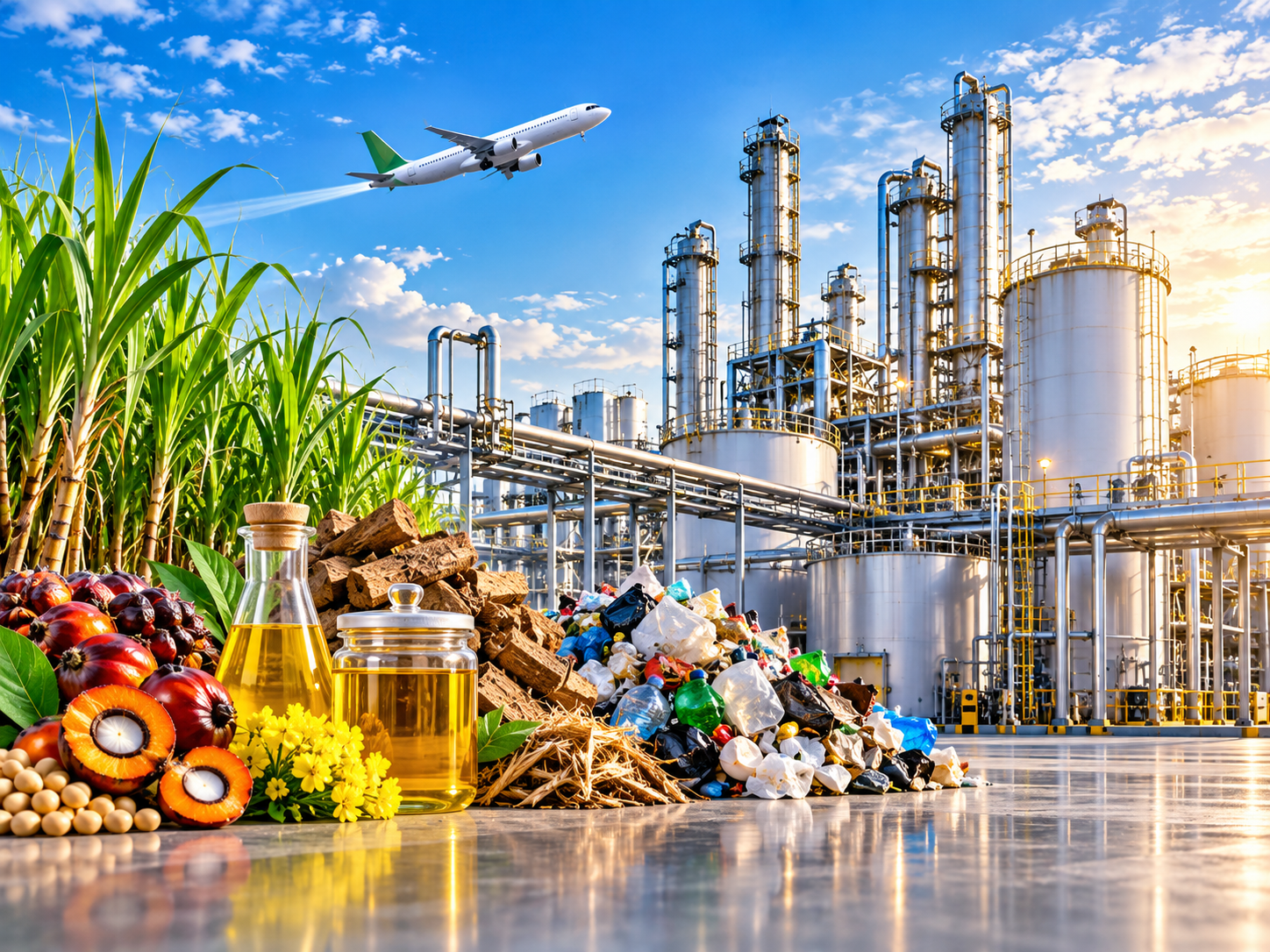
永續航空燃料的生產方式相當多元,可利用回收食用油、動植物油脂、農林剩餘物及部分都市廢棄物等原料,透過不同轉換技術製成符合航空用途的燃料。其中,加氫處理酯類與脂肪酸技術(HEFA)是目前較成熟的製造途徑之一,能將適合的油脂原料轉化為航空燃料組分。其他技術包括費托合成、酒精轉航空燃料,以及結合再生電力、綠氫與回收二氧化碳製造的合成航空燃料。不同製程在能源效率、原料供應及環境影響方面各有差異,因此必須透過嚴格的品質檢測與永續性評估,確保燃料符合航空安全標準,並避免原料生產造成森林砍伐、土地利用衝突或其他環境問題。
SAF can be produced from a variety of feedstocks, including used cooking oil, animal and vegetable fats, agricultural and forestry residues, and certain municipal waste. These materials can be converted into jet fuel through different technologies. Hydroprocessed esters and fatty acids (HEFA) is one of the most mature pathways, converting suitable oils and fats into jet fuel components. Other technologies include Fischer–Tropsch synthesis, alcohol-to-jet, and synthetic fuels produced using renewable electricity, green hydrogen, and captured CO₂. Each production route has different energy efficiencies, feedstock availability, and environmental impacts. Strict quality testing and sustainability assessments are essential to ensure the fuel meets aviation safety standards and to avoid issues such as deforestation, land-use conflicts, or other environmental concerns.
減碳效益與航空產業轉型挑戰Carbon Reduction Benefits and Industry Transition Challenges
永續航空燃料能否真正發揮環境效益,取決於原料來源、製造能源、運輸方式及土地利用等多項因素。部分符合永續標準的 SAF 生產途徑,相較傳統航空燃料,可大幅降低全生命週期溫室氣體排放,但實際減量幅度並非固定,必須依照國際認可的方法進行計算與驗證。國際民航組織(ICAO)已建立相關永續認證與碳排放評估機制,協助產業提高透明度。然而,SAF 目前仍面臨生產成本偏高、原料供應有限、製造規模不足及機場供應設施建置等挑戰。航空公司、能源業者、飛機製造商與政府必須共同合作,才能逐步擴大燃料供應,讓永續航空從示範應用走向普遍商業化。
The environmental benefits of SAF depend on multiple factors, including feedstock sources, production energy, transportation, and land use. Some SAF pathways that meet sustainability standards can significantly reduce life-cycle greenhouse gas emissions compared with conventional jet fuel, but the actual reduction varies and must be calculated and verified using internationally accepted methods. The International Civil Aviation Organization (ICAO) has established related sustainability certification and carbon assessment mechanisms to enhance transparency. However, SAF still faces challenges such as higher production costs, limited feedstock supply, insufficient manufacturing scale, and the need for airport supply infrastructure. Airlines, energy providers, aircraft manufacturers, and governments must work together to expand SAF supply and move from demonstration projects to widespread commercial use.

未來航空能源與全球永續願景Future Aviation Energy and Global Sustainability Vision
面對國際航空產業追求 2050 年淨零碳排放的長期目標,永續航空燃料將與新世代高效率發動機、電動飛行及氫能技術共同推動航空能源轉型。未來透過擴大再生能源使用、發展先進合成燃料、改善生產效率及建立跨國供應鏈,有望逐步降低 SAF 成本並提高市場普及率。航空燃料的永續發展不僅關係到飛機本身,更涉及能源產業、農業資源、循環經濟與全球環境治理。隨著科技創新、國際合作及相關制度持續完善,航空運輸將有機會在維持全球連結與經濟發展的同時,逐步減輕對氣候環境的影響,朝向更潔淨、更有效率且更具永續性的飛行時代邁進。
To achieve the aviation industry’s long-term goal of net-zero carbon emissions by 2050, SAF will work together with next-generation high-efficiency engines, electric flight, and hydrogen technologies to drive the transition to sustainable aviation energy. Expanding renewable energy use, advancing synthetic fuels, improving production efficiency, and building global supply chains can help reduce SAF costs and increase market adoption. The sustainable development of aviation fuels involves not only aircraft, but also the energy industry, agricultural resources, circular economy, and global environmental governance. With ongoing technological innovation, international cooperation, and improved regulatory frameworks, aviation can maintain global connectivity and economic growth while gradually reducing its impact on the climate, moving toward a cleaner, more efficient, and more sustainable future for flight.