深空探索Deep Space Exploration
跨越太陽系的邊界,探索宇宙無限的可能。Pushing beyond the boundaries of the solar system to explore the infinite possibilities of the universe.
從太陽系走向浩瀚宇宙From the Solar System to the Vast Universe
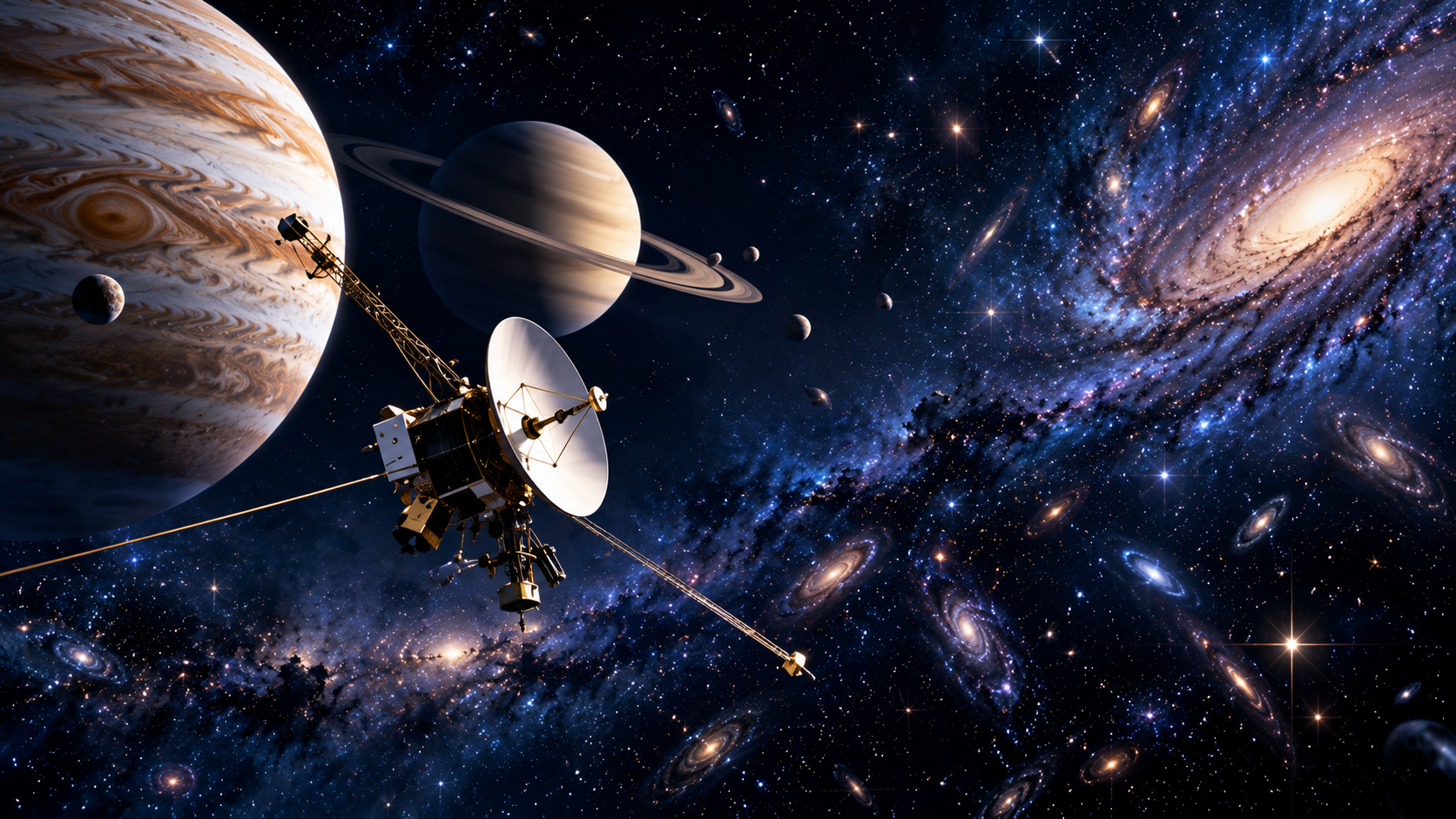
當人類將目光從月球與火星移向更遙遠的星際空間,深空探索便展開了全新的篇章。航海家一號與二號先後飛越外行星,傳回珍貴影像與科學資料,改變我們對行星及衛星的認識。兩艘探測器其後穿越日球層頂,進入太陽風主導範圍之外的星際空間,但並未抵達其他恆星系統。這些機器人先鋒以長期觀測延伸人類的感官,協助科學家研究粒子、磁場,以及太陽與周圍星際環境的交界。
As humanity looks beyond the Moon and Mars, deep-space exploration opens a new chapter. Voyager 1 and Voyager 2 flew past outer planets, returning images and measurements that transformed our understanding of planets and moons. Both later crossed the heliopause into interstellar space beyond the solar-wind-dominated region; neither has reached another star system. These robotic pioneers extend human observation, helping scientists investigate particles, magnetic fields and the interface between the Sun’s environment and interstellar space.
揭開遙遠星球的神祕面紗Unveiling the Mysteries of Distant Worlds
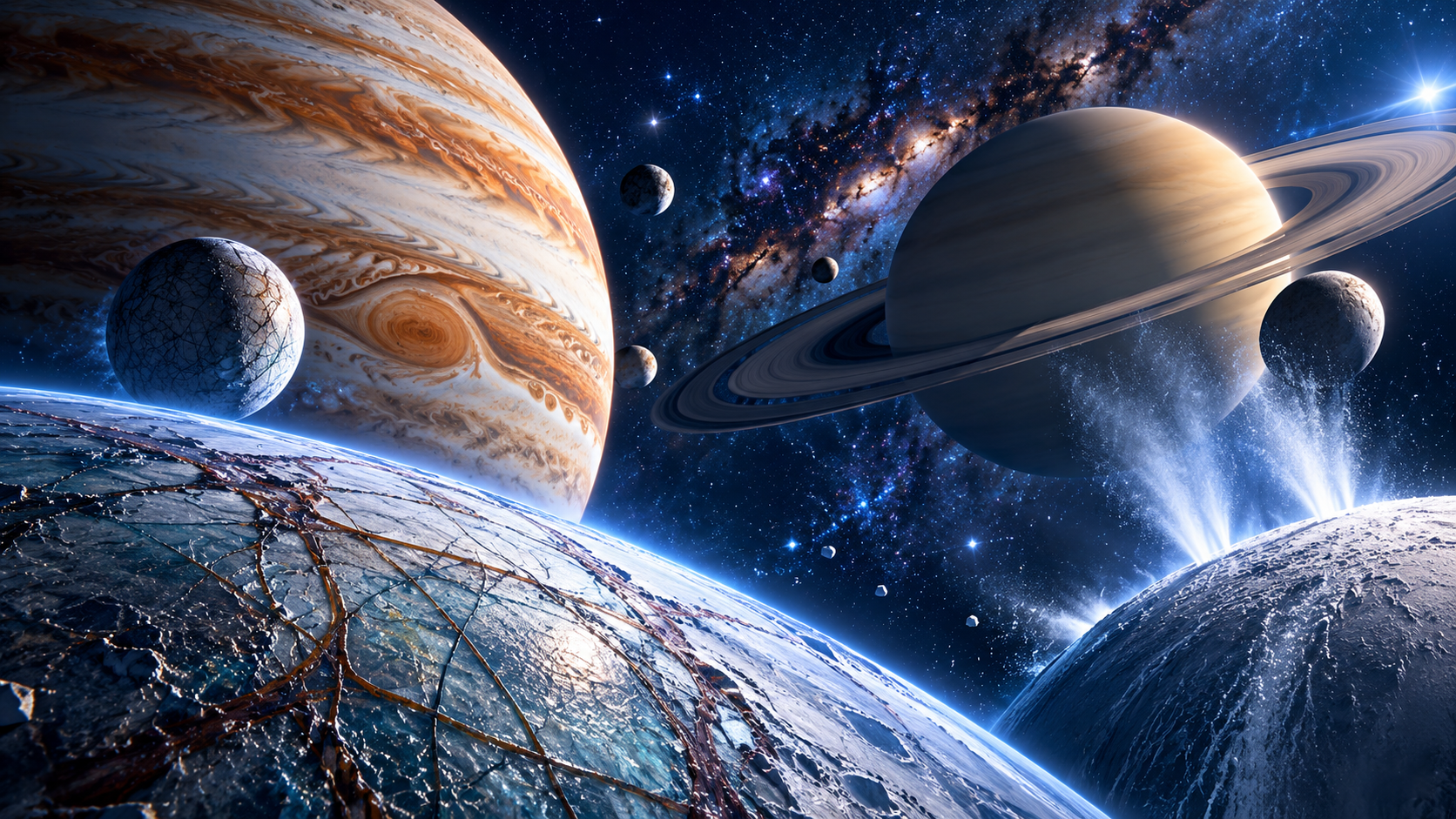
木星、土星及其衛星,是研究太陽系形成與演化的重要窗口。木衛二的冰殼下存在海洋的證據,以及卡西尼號對土衛二地下海洋與噴流的觀測,使冰衛星成為宜居環境研究的焦點。科學家關注液態水、能量與化學物質是否能共同提供適合生命的條件;這並不代表已找到生命。歐羅巴快船任務以研究木衛二的冰殼、海洋、成分與地質為目標,透過科學量測逐步檢驗我們對遙遠世界的推想。
Jupiter, Saturn and their moons offer important clues to the solar system’s formation and evolution. Evidence for an ocean beneath Europa’s ice, together with Cassini’s observations of Enceladus’s subsurface ocean and plumes, makes icy moons central to habitability research. Scientists investigate whether liquid water, energy and chemistry could jointly support life; this is not evidence that life has been found. Europa Clipper aims to study Europa’s ice shell, ocean, composition and geology, testing ideas about distant worlds through scientific measurements.
太空望遠鏡與宇宙新發現Space Telescopes and New Discoveries
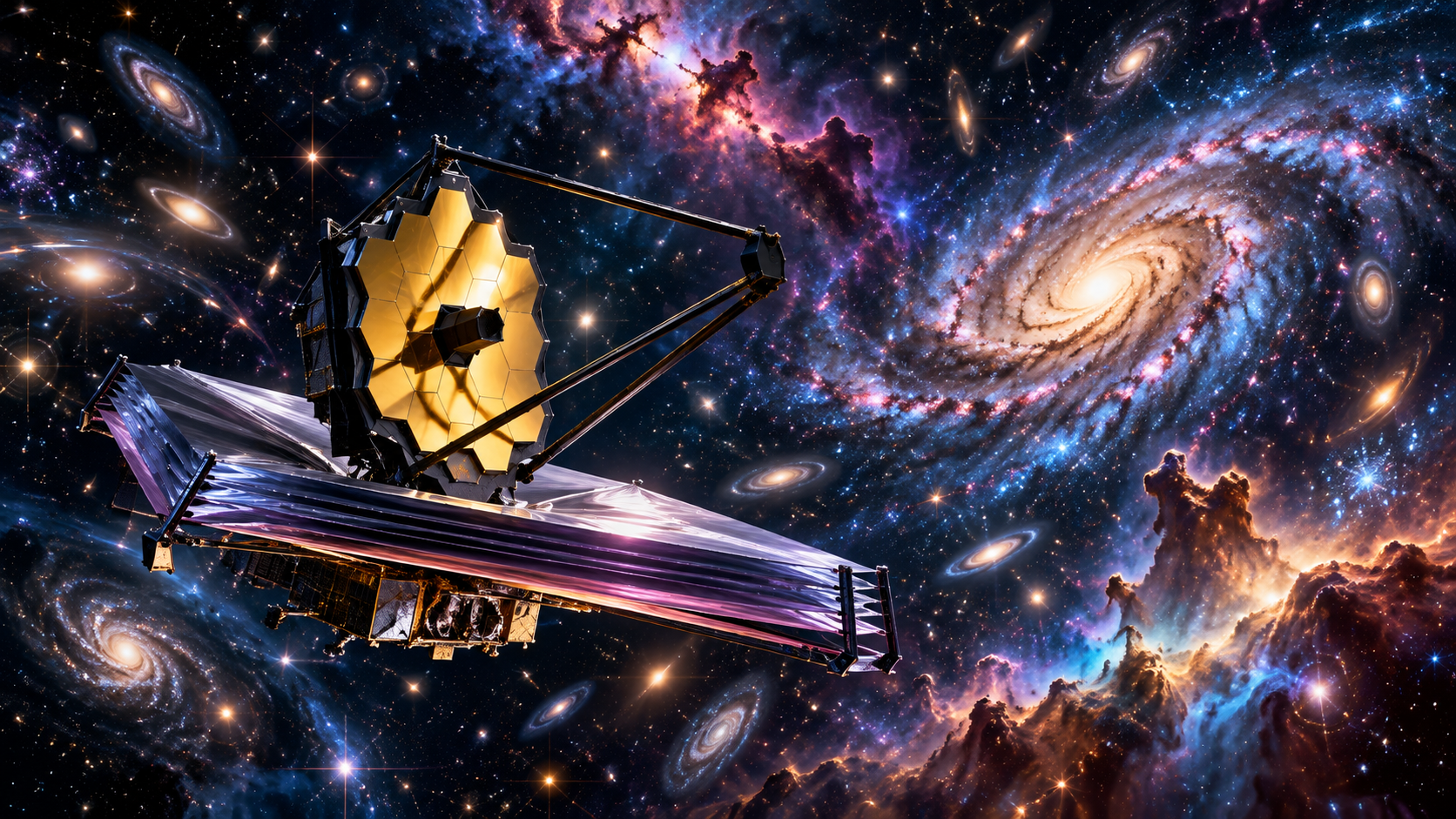
除了派遣探測器,人類也透過太空望遠鏡觀察宇宙深處。哈伯太空望遠鏡與詹姆斯韋伯太空望遠鏡,以互補的觀測波段研究星系形成、恆星演化與行星系統。韋伯的紅外線觀測能穿透部分宇宙塵埃,揭示恆星誕生的區域,也能分析部分系外行星大氣的化學成分。這些資料讓科學家比較不同世界的環境,持續修正宇宙演化模型;然而,大氣中的化學線索仍須審慎解讀,不能直接等同於外星生命的發現。
Space telescopes let us examine the universe beyond the reach of robotic probes. Hubble and the James Webb Space Telescope use complementary wavelengths to study galaxy formation, stellar evolution and planetary systems. Webb’s infrared observations can penetrate some cosmic dust to reveal stellar nurseries and analyze the chemistry of some exoplanet atmospheres. These data help scientists compare environments and refine models of cosmic evolution. Atmospheric chemical clues still require careful interpretation and do not by themselves establish the discovery of extraterrestrial life.
邁向星際文明的未來Toward an Interstellar Future
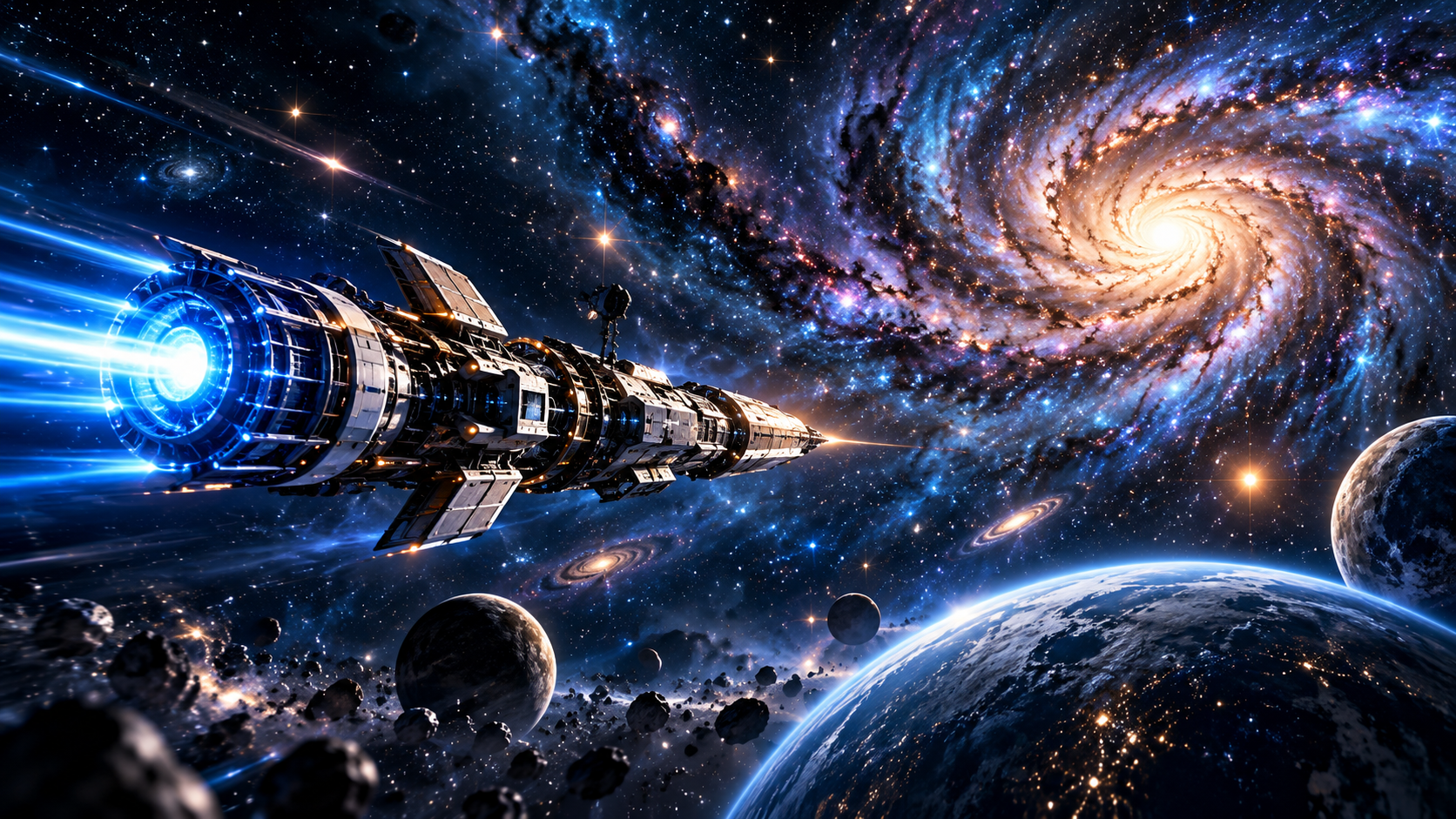
未來的深空探索,將仰賴更先進的推進研究、自主機器人與長距離通訊。人工智慧可望協助探測器辨識目標、安排觀測及處理突發狀況,降低通訊延遲對任務的限制。然而,恆星之間的巨大距離,仍對能源、航行時間、設備壽命與乘員安全提出嚴峻挑戰。載人星際旅行是長期科技課題,圖中的未來飛船並非現役載具。從可靠的機器人任務累積經驗,才能讓對宇宙的想像逐步轉化為可以驗證的探索方向。
Future deep-space exploration will depend on advanced propulsion research, autonomous robotics and long-distance communication. Artificial intelligence could help probes identify targets, schedule observations and respond to unexpected situations despite communication delays. Vast distances between stars impose major challenges for energy, travel time, equipment longevity and crew safety. Human interstellar travel remains a long-term technological challenge; the futuristic spacecraft shown here is not an operational vehicle. Experience from dependable robotic missions can turn imagination into research directions that can be tested.